

Let’s be honest—designing a living room layout can feel like one big puzzle. You want it to feel cozy, look pulled together, and still function for everything from movie nights to chatting with friends. But sometimes, no matter how many times we rearrange the furniture, it just doesn’t click.
The good news? With a few simple layout strategies, you can completely transform how your space feels—without buying a single new piece of furniture.
Whether you’re working with a compact city apartment or a larger family room, these five designer-approved tips will help you make the most of your layout and bring flow, function, and beauty to the heart of your home.

1. Start with the Focal Point (and Let It Lead the Way)
Every room needs a visual anchor. That could be your fireplace, a beautiful window, or even your TV. Once you’ve identified it, arrange your main seating to face or frame that focal point.
If you don’t have an obvious focal point, try creating one with a large piece of art, a bold mirror, or a striking light fixture. This gives the room direction—and makes arranging furniture so much easier.
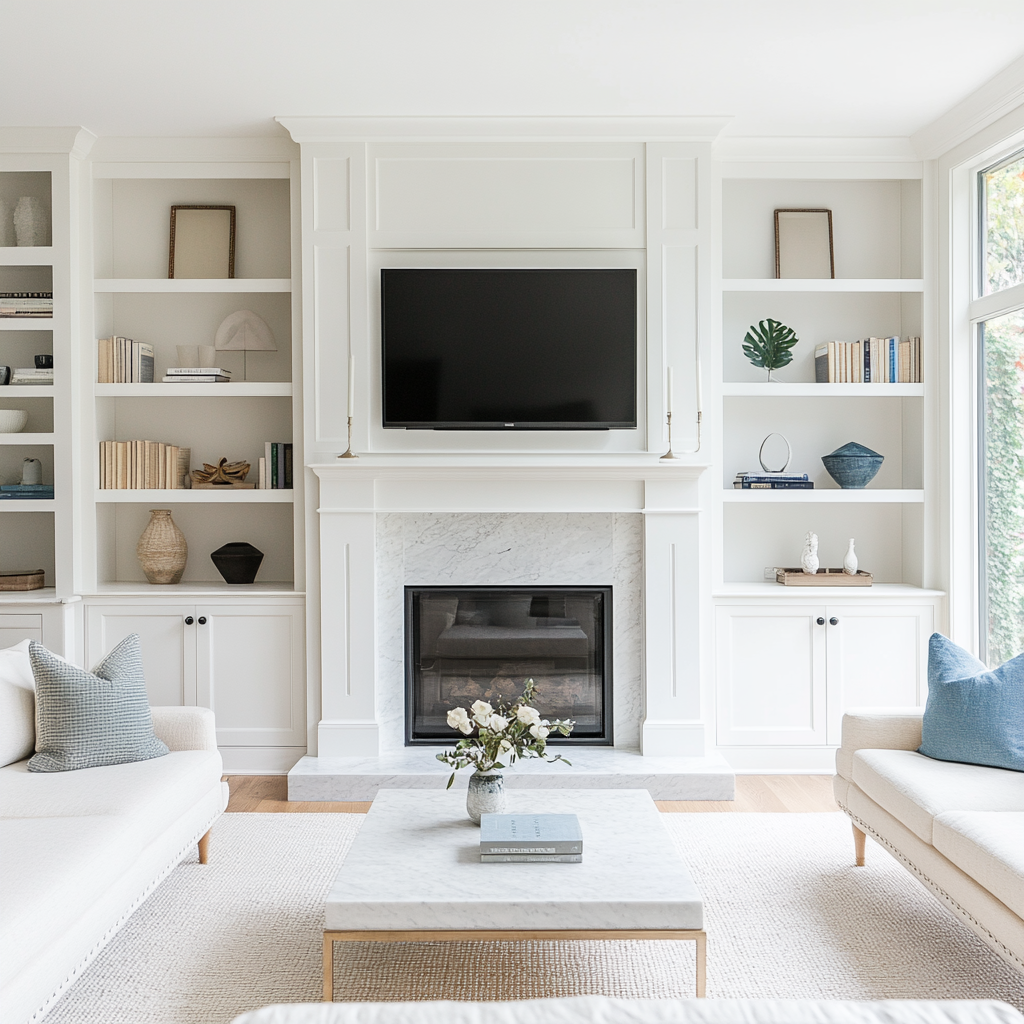
2. Float the Furniture (Yes, Even in Small Rooms)
It’s tempting to push all the furniture up against the walls, especially when space is tight. But floating your sofa or chairs—even just a few inches—can actually make the room feel bigger and more intentional.
Anchor floating pieces with a rug and a coffee table to create a “conversation zone.” It’ll instantly feel cozier and more complete.

Source: Cornerstone Architects
PRO TIP: Need help choosing the perfect curtains for your space? I offer interior design services to take the guesswork out of selecting the right window treatments. Whether you need guidance on curtain length, rod placement, or fabric choices, I can help bring your vision to life. Reach out to get started!
3. Create Zones in Open-Concept Spaces
If your living room shares space with your kitchen or dining area, defining zones is key. Use furniture placement, rugs, or even lighting to give each area its own purpose without putting up walls.
A console table behind the sofa can subtly divide your living area from other spaces while still feeling open and connected.

Source: Kennedy Cole Interior Design
4. Mind the Traffic Flow
Make sure there’s enough room to move comfortably around your furniture. You want about 30–36 inches of walking space in main pathways—and around 18 inches between seating and coffee tables.
Walk through your space like a guest. If you find yourself weaving or bumping into things, it might be time for a little furniture shuffle.

5. Use Multipurpose Pieces
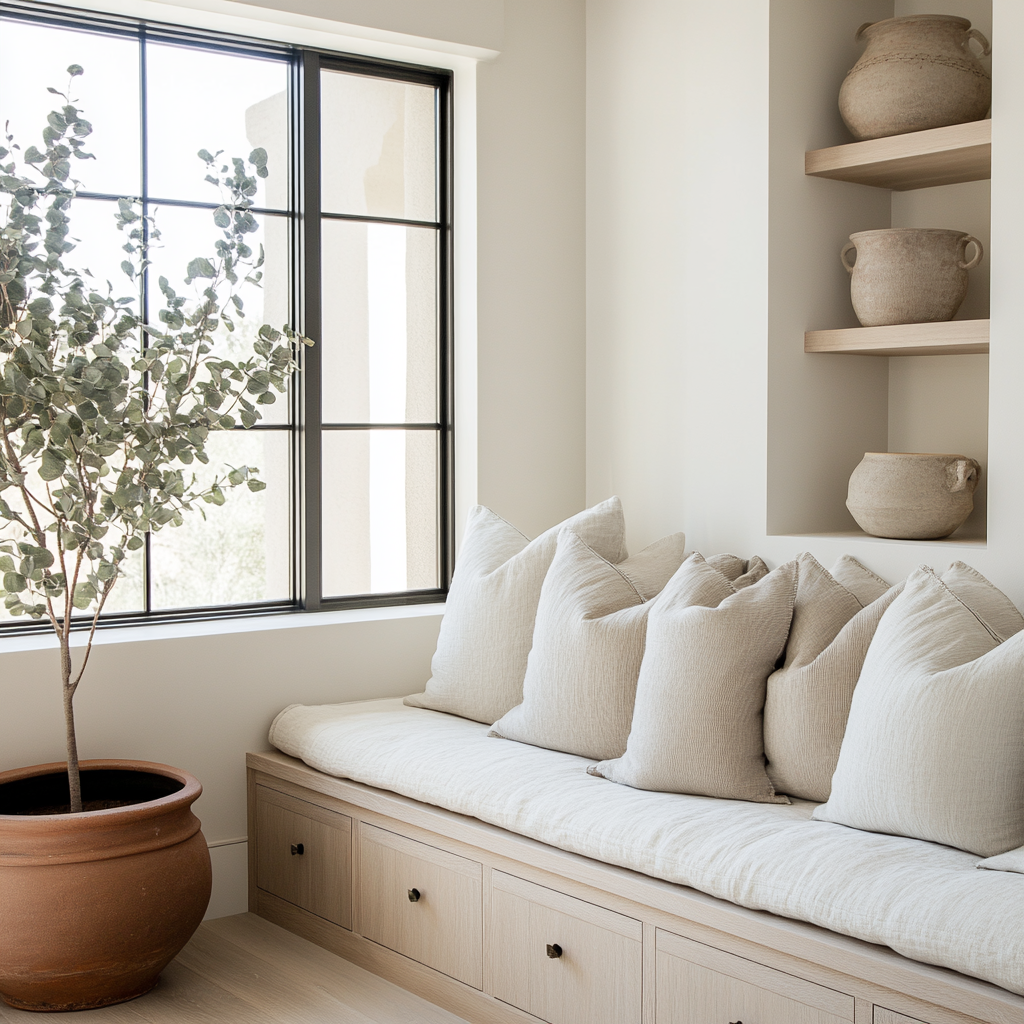
Ottomans, nesting tables, and storage benches are lifesavers in any living room. They can serve as extra seating, hold snacks or books, or hide clutter—all without crowding the room.
Look for pieces with clean lines and light legs to keep things feeling airy and open, especially if you’re working with limited square footage.
Let’s Design a Layout That Feels Just Right
There’s no one-size-fits-all when it comes to living room layouts, but with a few thoughtful choices, your space can be both functional and fabulous. And if you’re feeling stuck or overwhelmed, you don’t have to figure it all out alone.
Designer Tip: When It Might Be Time to Bring in Help
If you’re working on your home and things still don’t feel quite right, you’re not alone. Many of our clients start exactly where you are now. They’ve gathered ideas, saved inspiration photos, and maybe even purchased a few pieces, but the space still doesn’t feel cohesive. That’s often the moment when having a designer can make all the difference. We help homeowners create a clear plan so every decision works together. From layout and furniture placement to finishes and lighting, the goal is a space that feels thoughtful, comfortable, and complete.
If you’d like a little guidance with your space, you can learn more about our interior design services below.
Explore Interior Design Services
Planning a kitchen, living room, or full home project? Start with a quick discovery call to see if we’re a good fit.
Let’s go beyond the design to build something beautiful together!
More Valuable Interior Design Tips:
7 Best Tips to Effectively Organize Your Home In 2025
The Perfect Curtain Length and Height for Every Room
7 Reasons Your Home Doesn’t Feel Cohesive

0 Comments