

Hanging blinds and curtains together can completely transform a room, adding both style and function. But if you’re like most of us, the process can feel a bit overwhelming.
How do you choose the right textures, colors, and placements to achieve that perfect look without overdoing it?

Let’s dive into the most common design questions people face when pairing blinds and curtains. We’ll look at:
- selecting the right materials
- balancing functionality with aesthetics
- matching or contrasting your blinds and curtains
- layering window treatments for a cohesive look
- finding the right curtain length and blind placement
- coordinating styles throughout your home
- deciding if curtain tiebacks fit into your design
Design Tips for How to Hang Blinds and Curtains Together
I’ll share simple yet effective tips to help you create a space that feels both beautiful and curated. Let’s dive in!
Should I Match or Contrast Blinds and Curtains?
When choosing between matching or contrasting your blinds and curtains, it’s all about keeping a natural, clean look that lets your room’s design take center stage.
Matching Blinds and Curtains:
Matching a room’s blinds and curtains is an easy way to create a seamless, minimalist feel. Opt for soft neutral tones like white or beige, which blend effortlessly into the window frame. This keeps the focus on natural light and the airy openness of the space.
An example of this would be a monochromatic look of pairing taupe blinds with matching curtains. This gives the room a light and cohesive feel.

Contrasting Blinds and Curtains:
For more depth, consider contrasting materials. Pair wood blinds with sheer curtains or linen drapes to add texture and warmth. This contrast highlights the natural beauty of the materials without overwhelming the room.
You can achieve this look by pairing wooden blinds with sheer white curtains. These two textures together create a soft, organic contrast that still feels airy and natural.

Which Combinations of Blinds and Curtains Feel Organic and Minimalist?
To create a natural, minimalist vibe, the right pairing of blinds and curtains is key.
Wooden or Bamboo Blinds + Linen Sheers:
Wooden or bamboo blinds bring a warm, earthy tone to the space, while linen sheers soften the look, allowing natural light to filter through. This combination feels organic and grounded, perfect for a calm, inviting atmosphere.

Roman Shades + Lightweight Curtains:
Roman shades in neutral tones offer a sleek, tailored look that complements minimalist design. Pair them with lightweight curtains for a soft, balanced effect that keeps the room feeling open without losing function.
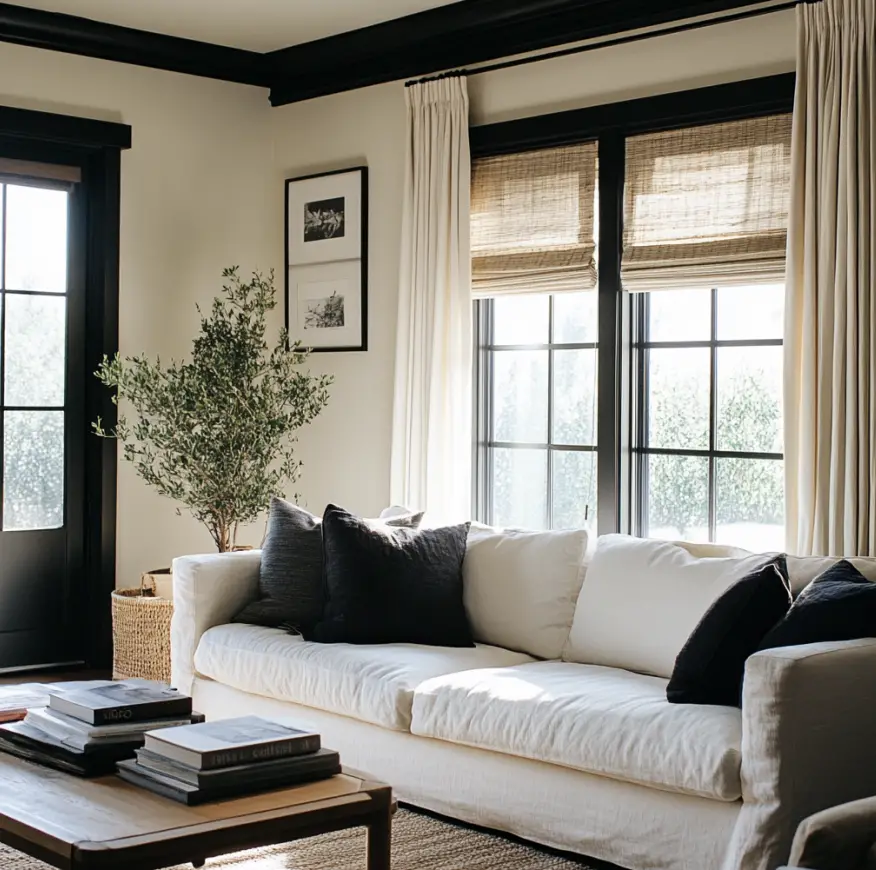
Roller Shades + Cotton Curtains:
For a more contemporary take, roller shades in a neutral color provide clean lines, while cotton curtains add texture and lightness. This pairing is perfect for keeping things simple yet layered.
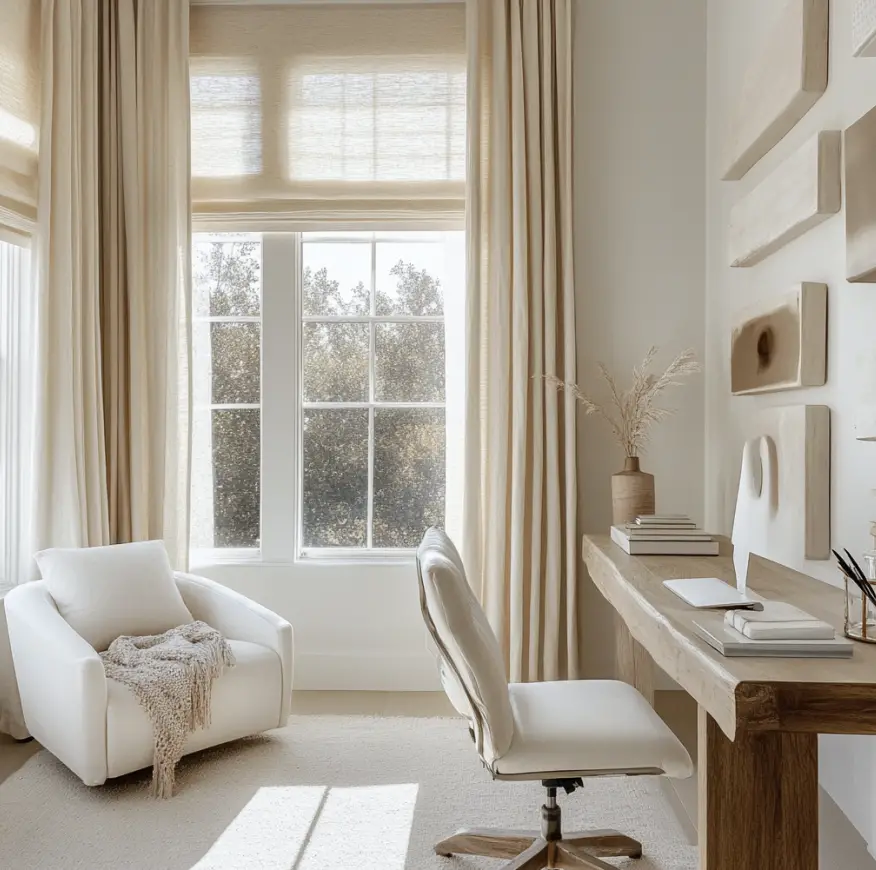
These combinations create a minimalist style while maintaining a natural, relaxed feel.
How Do I Layer Blinds and Curtains for a Minimalist Yet Inviting Look?
Layering blinds and curtains can bring warmth and texture to your space without disrupting the clean lines of modern organic design.
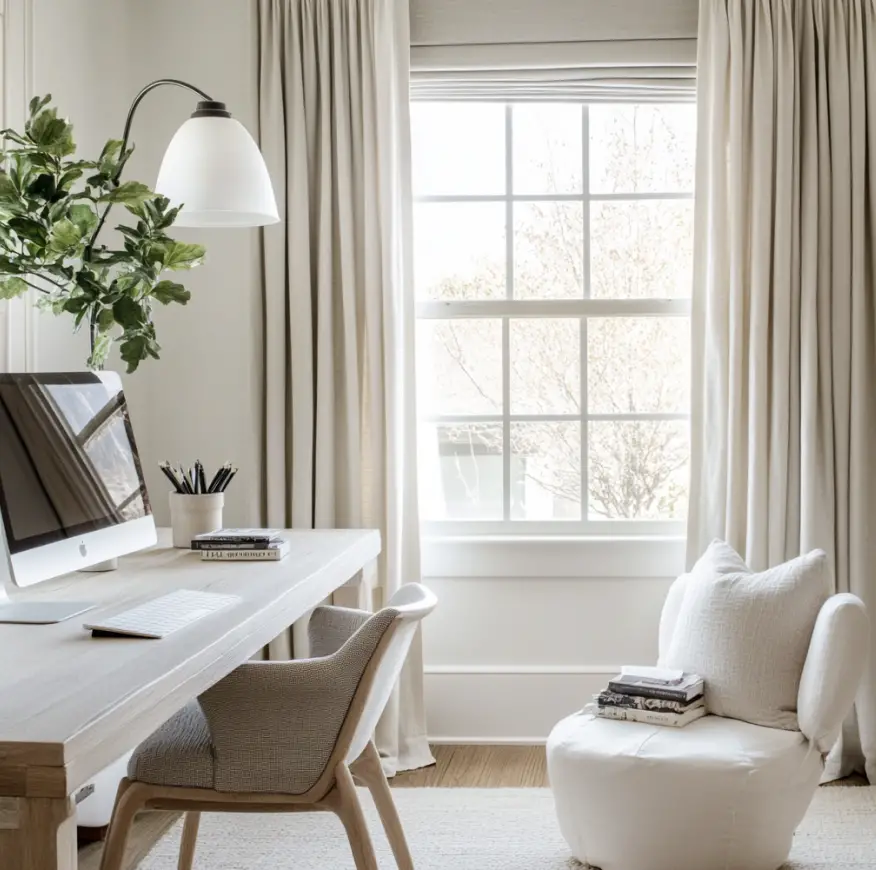
Simple Blinds + Flowy Curtains:
Stick with functional blinds for light control, like roller or Roman shades, and add a soft layer of flowy curtains. Interior designers often recommend sheer curtains to create a soft, open atmosphere.
For example, in a living room, try pairing neutral roller shades with linen curtains for a relaxed yet polished look.
Natural Fiber Blinds + Sheer Curtains:
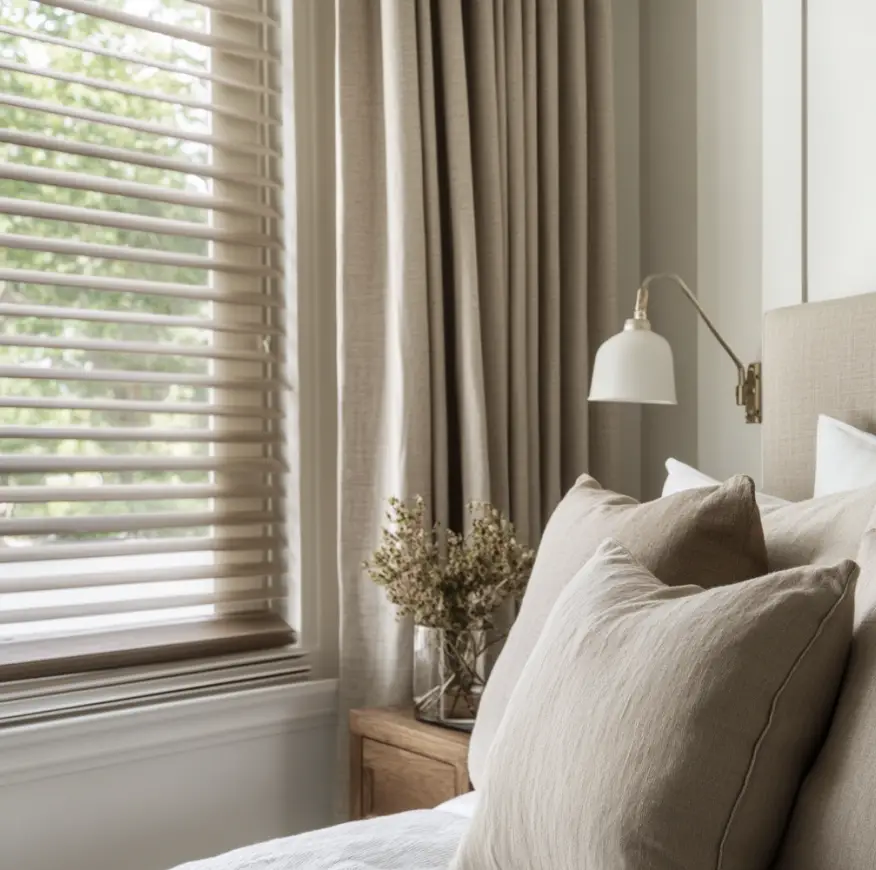
For that effortless Scandinavian vibe, natural fiber blinds (like bamboo or wood) work beautifully with sheer curtains. This combination provides light control while making the room feel inviting.
In a bedroom, woven wood blinds with light, sheer curtains create a calm, balanced space that blends different styles seamlessly.

What Curtain Length and Blind Placement Work Best?
The placement of your blinds and curtains plays a huge role in the look of your space. The key is to maintain clean lines while giving your windows enough height and width to make the room feel more open.
Blinds Inside the Frame:
For a sleek, minimalist look, hang your blinds inside the window frame (outside mount is a no-no here!). This works especially well with large windows, keeping the design tidy while controlling the amount of light.
Pairing inside-frame blinds with floor-length curtains adds softness without taking away from the clean, modern feel.
Floor-Length Curtains for Height and Width
Hang your curtains about 6 inches below the ceiling and let them fall all the way to the floor. This not only makes your windows appear taller but also gives the room a more polished look.
Another key detail is choosing a curtain rod that extends beyond the width of the window frame. This allows the curtains to sit outside the frame when open, creating a feeling of extra width and allowing more natural light to fill the room.
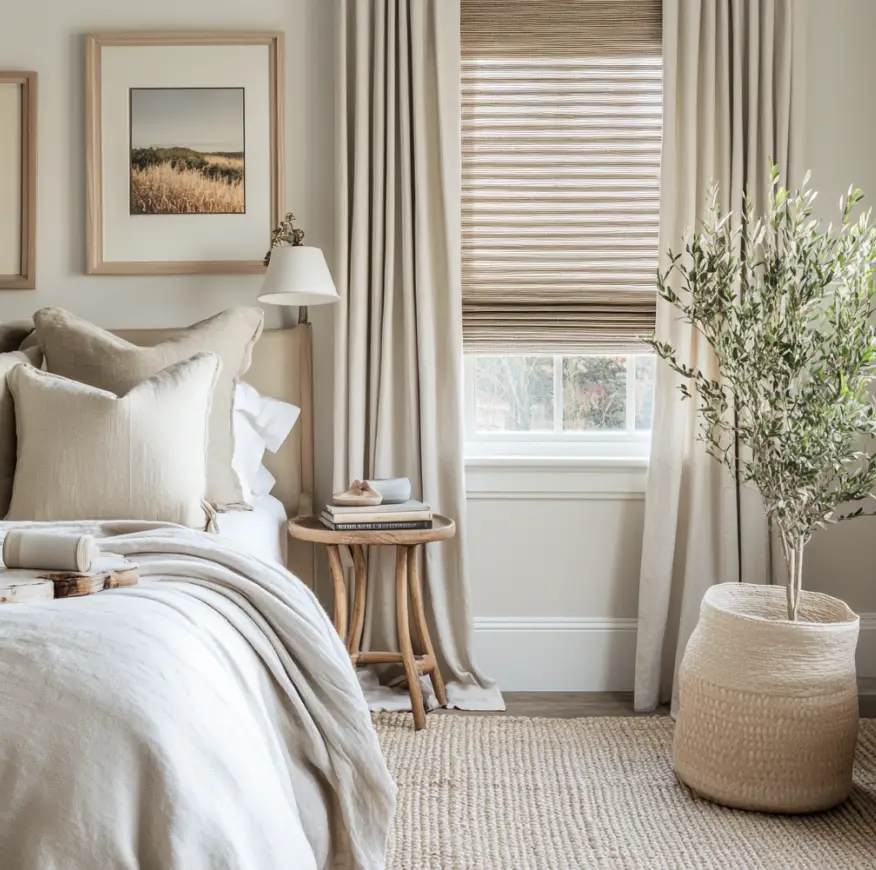
For more details on how to hang curtains at the right height, check out my article dedicated to that topic!
In spaces like the living room or bedroom, this combination of blinds and long, wide-set curtains gives the room an elegant yet cozy vibe, while keeping the window as the focal point.
It’s a simple but effective way to make your windows—and your entire room—feel more spacious and inviting.
Should I Use the Same Window Treatment Style Throughout My Home?
Deciding whether to keep window treatments uniform or mix things up depends on the overall feel you want in your space.
Cohesive Neutral Tones:
A great way to keep a consistent look is by using cohesive neutral tones throughout your home.
This creates a clean, consistent look, while allowing you to vary the types of blinds or curtains. For example, using white roller shades in the kitchen and soft, neutral Roman shades in the bedrooms can bring subtle differences without disrupting the flow.

Mixing Textures for Subtle Variety:
For a more sophisticated look, try mixing textures while keeping the color palette consistent. A combination of bamboo blinds in the living room and fabric shades in the bedroom adds variety while still keeping things simple and organic.
This approach works well when you want to introduce different types of blinds without overwhelming the space.
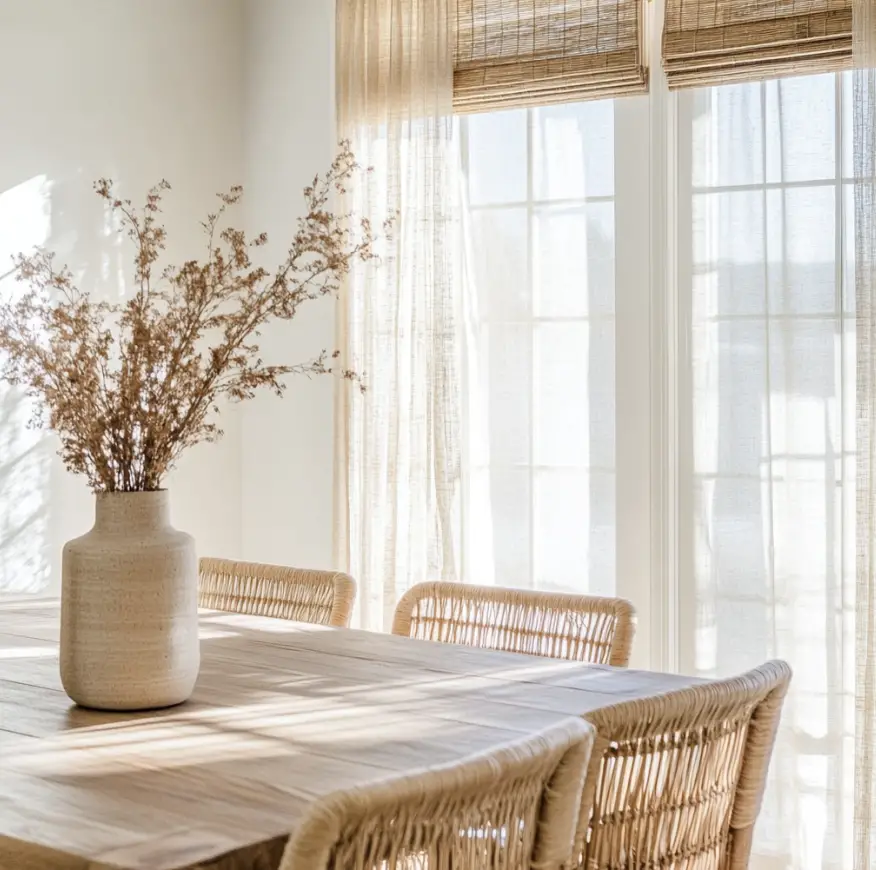
By maintaining simplicity with understated variations, you’ll create a home that feels balanced and thoughtfully designed.
Do Curtain Tiebacks Fit Into a Modern Organic Look?
Curtain tiebacks can be a great option if used the right way in a modern organic space. Opt for simple, natural materials like rope or linen to keep the look understated and functional.
Tiebacks add an extra layer of softness without overpowering the room, making them ideal for casual spaces where you want to let in more light while maintaining a relaxed feel.
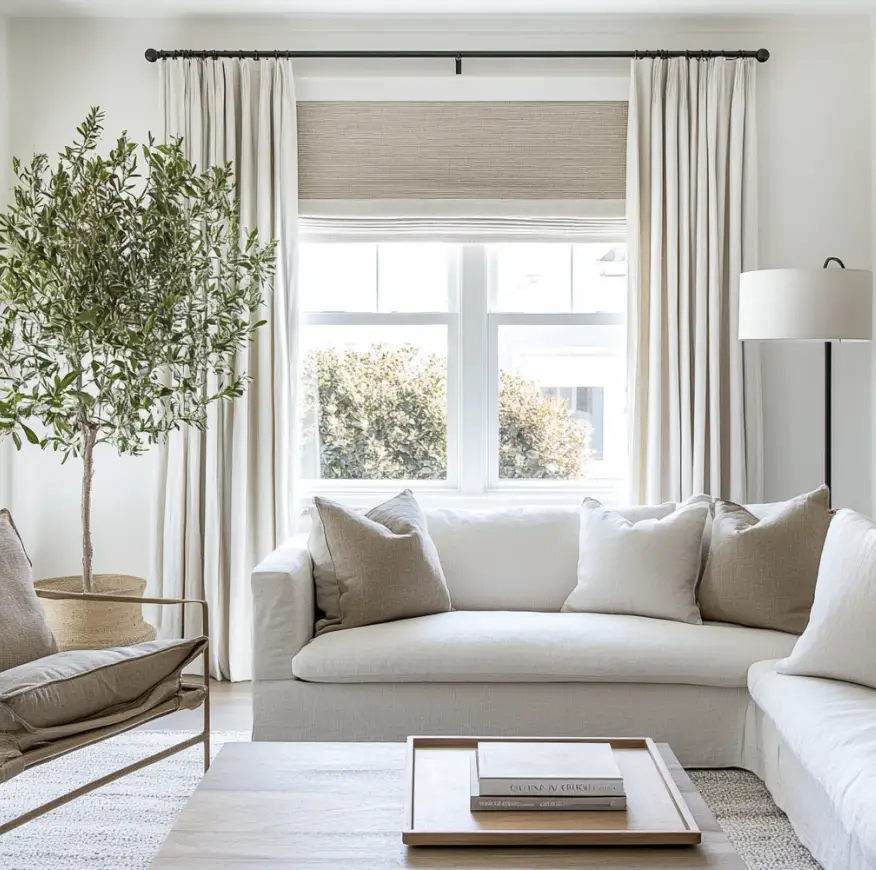
Pairing blinds and curtains doesn’t have to be complicated. With the right materials, placement, and balance of style and function, you can create a space that feels both beautiful and practical.
Whether you choose to match or contrast, layer for texture, or experiment with different styles, your windows will make a statement. Now it’s time to put these tips to use and transform your home!
Feel free to share your design successes or ask any questions in the comments below!
Designer Tip: When It Might Be Time to Bring in Help
If you’re working on your home and things still don’t feel quite right, you’re not alone. Many of our clients start exactly where you are now. They’ve gathered ideas, saved inspiration photos, and maybe even purchased a few pieces, but the space still doesn’t feel cohesive. That’s often the moment when having a designer can make all the difference. We help homeowners create a clear plan so every decision works together. From layout and furniture placement to finishes and lighting, the goal is a space that feels thoughtful, comfortable, and complete.
If you’d like a little guidance with your space, you can learn more about our interior design services below.
Explore Interior Design Services
Planning a kitchen, living room, or full home project? Start with a quick discovery call to see if we’re a good fit.
Let’s go beyond the design to build something beautiful together!
More Interior Design Posts:
23 Interior Design Mistakes You Can Easily Fix

0 Comments