

Last year I took on the challenge of converting an old bedroom into a functional home office. Creating a work space that’s both beautiful and practical can be a tough process.
For a while now, my home office had been in a catch-all room. Fulfilling many functions, this spare room served as not only my work area, but also my son’s closet; our guest room; and an overflow storage room.
Not ideal surroundings for a dedicated home office.

However, I made it work because it’s in a part of our house that is quiet. It allowed me my own space to focus and get things done.
I like that I was able to hide away my workspace when my day was done, rather than cluttering the dining room table or the living room. And it was much better than having to put everything away at the end of the day.
BUT my makeshift workspace was far from pretty. Not to mention, it was very much lacking in functionality. I was crammed into a little slice of the room.
Trying to be organized was next to impossible. Overall, while the situation worked, it was not ideal. I was ready for a change….
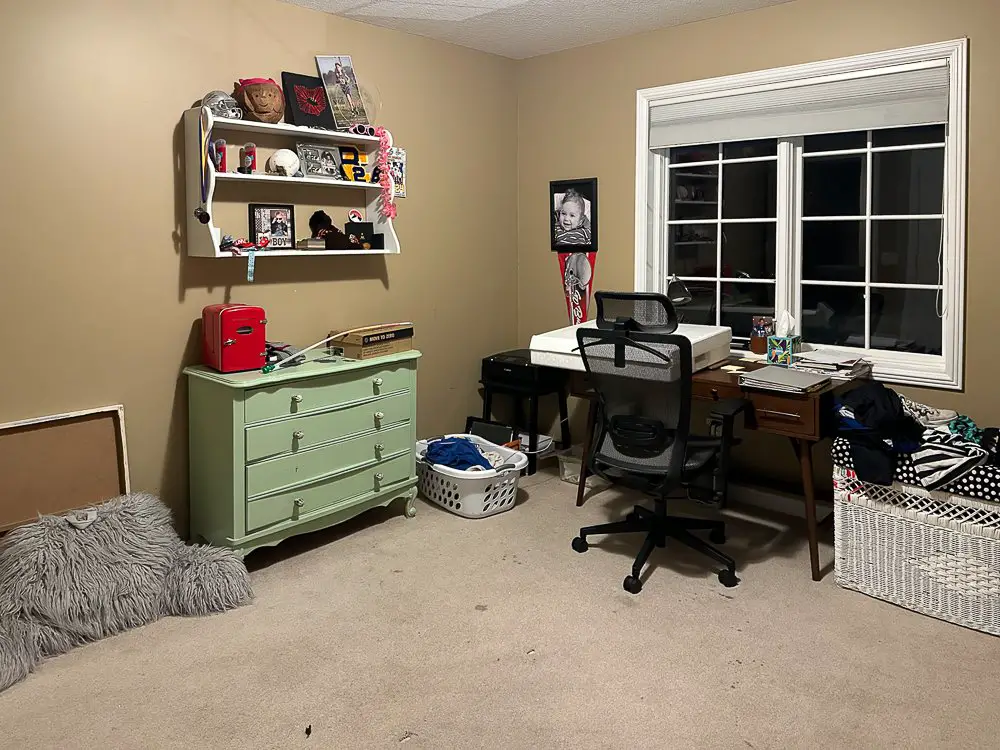
So, off to the drawing board I went. More than anything else, I wanted this room to be a space where I looked forward to spending my day. When I opened my door to start my day, I wanted it to be inviting.
But pretty only gets you so far. More importantly, I wanted it to be functional and organized too.
Through this process, I narrowed down 7 key steps that would not only boost my productivity, but also bring me joy.
Whether you’re starting from scratch or looking to improve your current setup, I believe you’ll find these tips helpful.
7 Stylish and Functional Home Office Tips
Let’s transform your home office into a place where both creativity and productivity thrive.
A few of the tips we’ll explore are:
- Choosing the right chair and desk to support your posture (while still being a pretty design element of the room :) ).
- Choosing the right lighting.
- How to organize your space to keep everything you need at your fingertips.
These are just a sampling of the tips we’ll cover. Let’s dive in…

The Ergonomics of Productivity
If you spend a lot of time at your desk, ergonomic furniture is a must-have. What is ergonomic furniture? It’s furniture that is purposefully designed to prevent physical strain and support your body in the right places.
Medical experts emphasize that using the right office furniture can make a big difference in your comfort and health. Choosing furniture that fits your body and your work style is a great way to boost productivity and keep you feeling good, even on long workdays.
Here’s a simple checklist to help you choose and position your ergonomic furniture:
- Desk Chair: Look for a comfortable chair with adjustable height and back support. It’s a good idea to choose one that also has armrests that can be adjusted so that your shoulders can stay relaxed.
- Desk: Your desk should be at a height that lets your elbows rest comfortably at a 90-degree angle. It’s also a great way to ensure your wrists are straight while typing. An adjustable desk is a great option.
- Monitor: Position your monitor about an arm’s length away, with the top of the screen at or slightly below eye level. This setup helps avoid neck strain.
- Lighting and Accessories: Arrange your office so that there’s plenty of light, and consider using a desk lamp to avoid eye strain. Adding a footrest can also help if your feet don’t quite reach the floor.
These tips are all great, but often times office furniture that promotes good posture is far from being stylish. Here is a great option for a desk chair and desk that fits the bill for aesthetically pleasing while still offering good posture support….
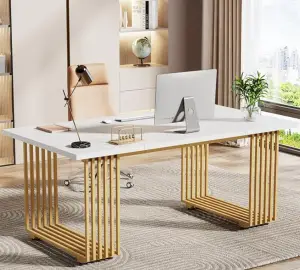
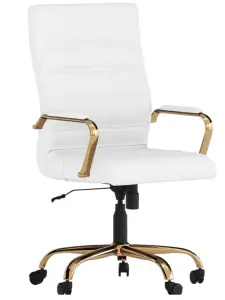
By following these tips and incorporating ergonomic furniture that matches your personal style, you can create a workspace that looks great and feels even better. Your body will thank you for it in years to come.
Amazon Affiliate Links Included
Functional Home Office Lighting: The Bright Idea
Good lighting is key to creating a comfortable and productive workspace. It’s important to use both natural lighting and artificial lights to make your office feel bright and lively.
Having plenty of natural light can help reduce eye strain and boost your mood.
To make the most of natural lighting, position your desk near a window. This setup not only brightens your entire space but also gives you a view that can offer a mental break from your work.
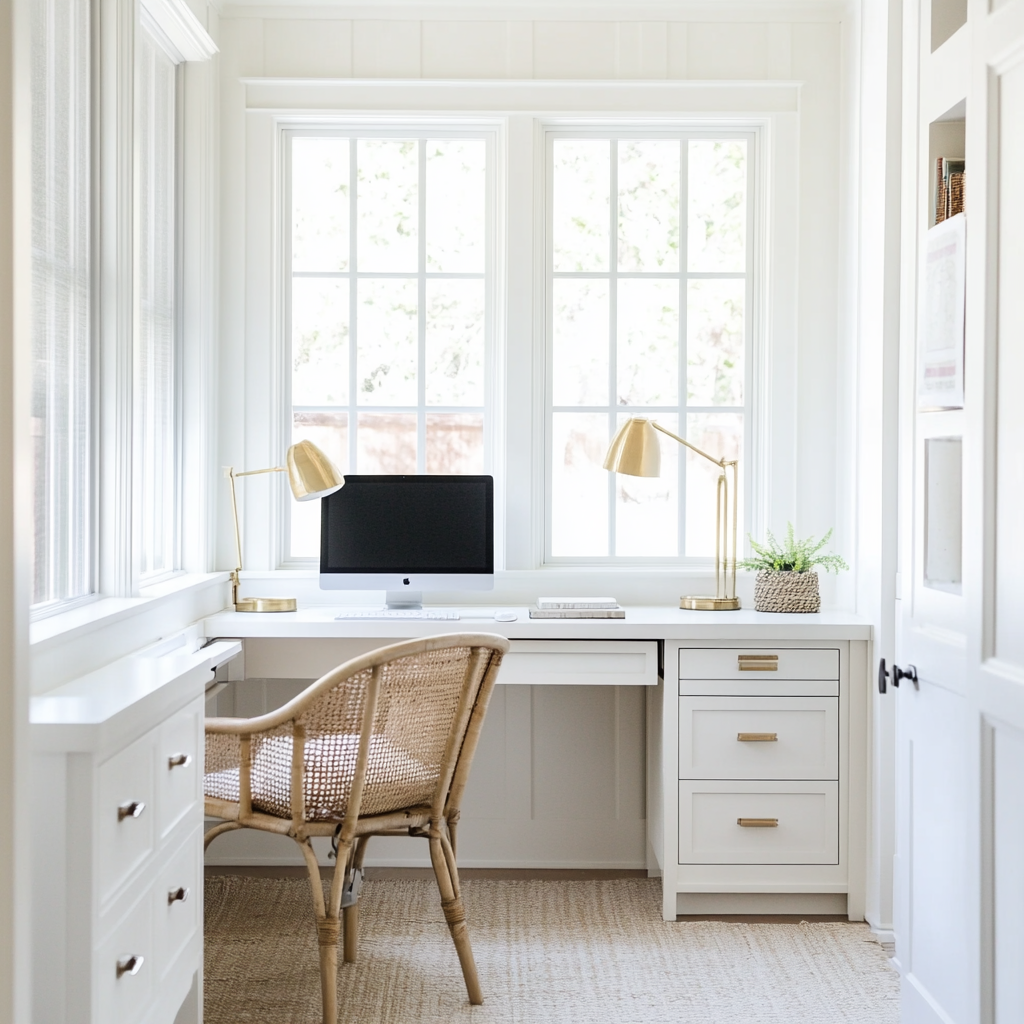
My desk sits right in front of the double windows of my small home office. In designing my perfect workspace, I considered placing my desk along a wall that would offer a better backdrop when doing zoom calls.
However, I really didn’t want to stare at a blank wall when my mind got stuck in the middle of writing blog posts. I knew looking outside AND allowing my body to soak up the natural light would be the best option for encouraging my creative juices to flow.

For those times when natural light isn’t enough, like on cloudy days or during evening hours, having the right artificial lighting is crucial.
Desk lamps are a good choice because they provide direct light to your work area without adding glare or shadows.
Look for a table lamp with an adjustable shade to direct light exactly where you need it. This helps enhance focus and keeps the lighting comfortable.
Remember, the goal is to balance the light sources in your room so that the entire area is well-lit without any harsh effects.
Calming Colors and Decor That Enhances Focus
When it comes to choosing the right color palette for your space. It truly boils down to just that…what is the right color palette for YOU?!
For some people a calm color palette is what they thrive on. It helps them work for longer periods of time and feel less stressed. Creating a more relaxed and focused environment.
But for others, using bright and energetic colors boosts their creativity and keeps them motivated.
It’s all about personal preference. Finding the right colors that make you feel good and help you work better.
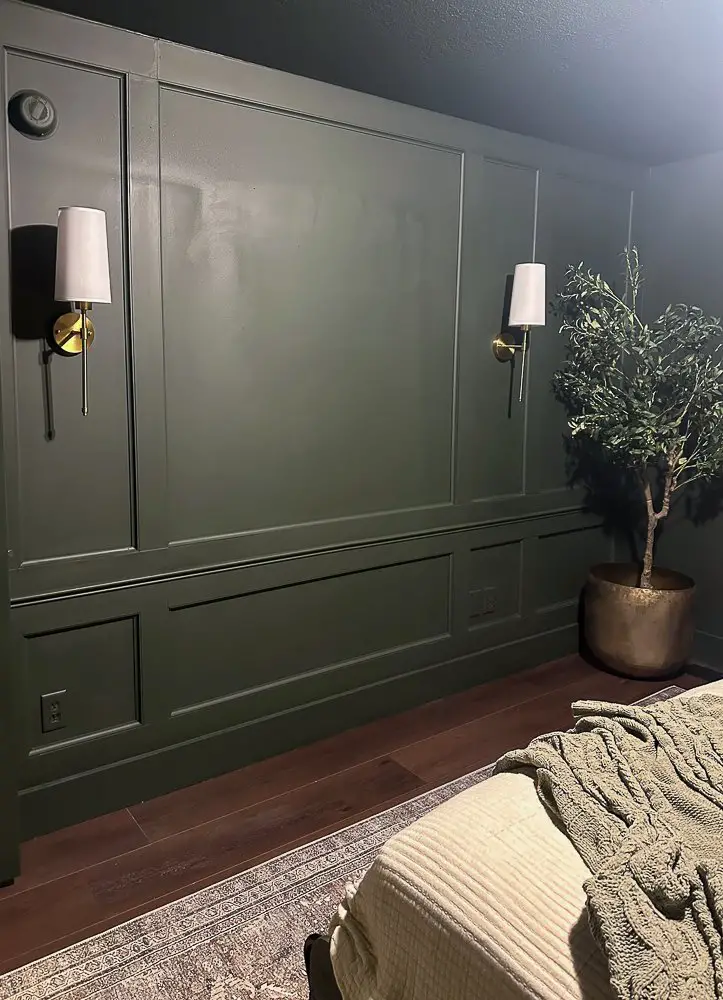
For my home office, I chose a dark and moody color palette. Mixing in natural wood tones added another layer of coziness. I love the warmth that this dedicated workspace exudes.
Here’s a structured chart to help you choose the best colors for your home office space…
Download a copy of the Color Palette Tips Guide…

Mastering Your Tech and Cables
When we think of being organized, we often only focus in on the clutter on our desk. But cords going every which way can become a jumbled up mess. This can create not only an eyesore, but also add extra stress into our workday.
Keeping cables and cords organized is crucial for maintaining a clean and functional home office space.
One effective way to manage tech clutter is by using stylish cable management boxes. These boxes hide your cords and keep them untangled, which can help clear up your desk space and make your work area look neater.
Amazon Affiliate Links Included
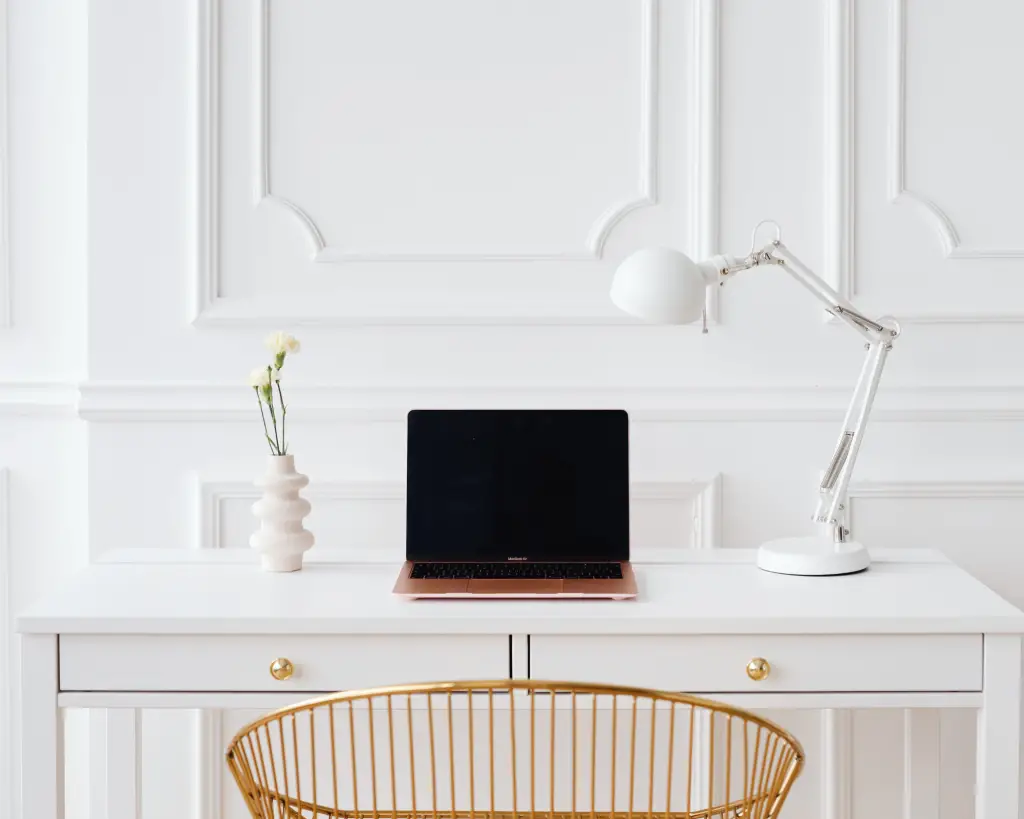
You can also explore DIY solutions like using binder clips attached to the edge of your desk to hold cables, or wrapping cords in velcro strips for easy adjustments.
Another great tip is to invest in wireless devices, such as a wireless keyboard and mouse. This reduces the number of cables on your desk, helping to maintain a dedicated space for working without unnecessary interruptions from tangled wires.
Always try to keep your desk area free of clutter by having a specific place for each item, whether it’s a drawer for extra cables or a stand for your headphones.
Another place I contemplated positioning my desk was in the middle of the room. My eye is always drawn to these beautiful home offices on Pinterest that have the desk as the focal point in the center of the room.
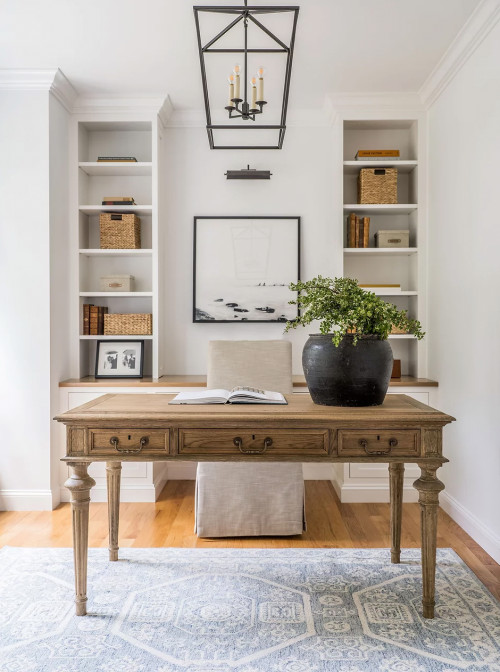
While it looks so good in the pictures, I had to take it all the way to reality and consider an important question. Where are all of the cords? Obviously, they’ve taken these out of the picture for the sake of taking a beautiful picture.
In the end, this was not practical for me. And as I mentioned before, I ended up placing my desk against the wall with windows. Not only did this provide natural light, but also a place to plug in all of my devices.
Long story short, when considering where to place your desk, make sure it’s practical.
A tidy workspace is key to a functional home office, as it promotes efficiency and reduces distractions.
Vertical Space: The Sky’s the Limit
Using vertical space effectively can greatly enhance the organization and aesthetic appeal of your home office.
I added a wall of built ins to my home office space. These floor-to-ceiling cabinets from Home Depot allow me to hide away all of the clutter and keep my space organized and tidy.

Installing floating shelves above your desk area provides extra storage without taking up valuable floor space. These shelves are perfect for keeping books, decorative items, and essential documents within easy reach.
You can personalize these shelves with small planters or photos, adding personal touches that make the space more inviting.
Another great option is to use a wall-mounted bulletin board. This is not only functional for pinning important notes and reminders, but it also allows you to display inspirational quotes or memorable keepsakes.
Wall-mounted boards can serve as a central piece in your office, helping you stay organized and motivated.
Functional Home Office: Personalize for Inspiration
Adding personal touches to your home office can inspire your creativity and make the space feel more like your own.
For example, using decorative containers for storing office supplies not only keeps your workspace organized but also adds a touch of your personal style.
These containers can be anything from brightly colored bins to refined, neutral boxes that reflect your personality and inspire your work.
Artwork is another fantastic way to personalize your office. Choose pieces that motivate you but are not too distracting.
This might include a favorite painting, motivational posters, or even a simple family photo in a beautiful frame.
I love to create my own artwork. Here are a few ideas of pieces you can easily make on your own:
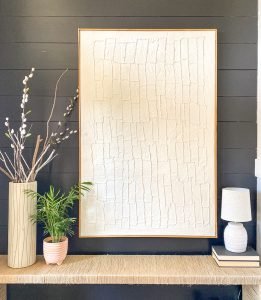
Creamy Paste Textured Wall Art

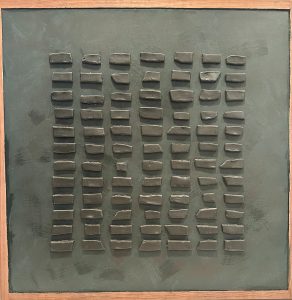
Be sure to check out the video to this Abstract Wall Art…
Simply adding throw pillows to an accent chair can add comfort and a pop of color.
These personal touches make the space more inviting and stimulating without cluttering the workspace.
While layout, lighting, and storage are key to a functional office, there’s another layer that often gets overlooked—the way your workspace feels. Beyond just design and organization, it’s important to create a space that actually supports your focus, energy, and overall mood throughout the day.
Create a Sensory Space That Boosts Mood & Focus
Designing a home office isn’t just about how it looks—it’s also about how it feels. Creating a space that engages your senses can make your workday more enjoyable and help you stay focused longer.
Here’s how to add simple sensory elements that elevate both function and mood:
✅ Scent for Focus and Calm
A subtle fragrance can do wonders for your mindset. Try adding a reed diffuser or essential oil blend to your space.
Lavender and eucalyptus help calm your nervous system.
Citrus and peppermint boost alertness and energy.
If you’re prone to afternoon slumps, a fresh, invigorating scent can help you power through.
✅ Sound That Supports Your Workflow
Whether it’s background music, white noise, or complete silence, think about what helps you concentrate.
A small Bluetooth speaker can help you curate playlists for writing, admin work, or Zoom calls.
Prefer quiet? Try noise-canceling headphones to block distractions and get into your zone.
✅ Texture for Comfort
Don’t overlook how your workspace feels to the touch.
A cozy throw blanket, plush rug, or leather desk mat can soften the room and add warmth.
Natural elements like linen, rattan, or wood keep the space grounded and tactile—perfect for a more organic, Scandinavian-inspired office.
When your environment feels good to be in, you’re more likely to stay focused, relaxed, and inspired. It’s all about creating a space you actually enjoy spending time in—because productivity should never come at the expense of comfort.
Set Boundaries
One downside to working at home is that you can feel like you’re always working.
Setting clear work-life boundaries is crucial when working from home. It helps ensure that your home life and work life don’t blur together. This can lead to stress and burnout.
To maintain these boundaries, it’s a great idea to define your work hours just as you would in a traditional office setting.

Clearly communicate these hours to your family members, so they know when you’re available and when you’re not. Consider posting your schedule on the fridge or family bulletin board.
To manage interruptions effectively, set up signals that let others know when you can’t be disturbed.
This could be as simple as closing the door during work hours or wearing headphones. Let family members know that if the door is closed or if you’re wearing headphones, you’re in a focus zone.
Also, plan regular check-ins during breaks, like your lunch break, to spend time with family. This helps balance everyone’s needs and keeps communication open, making your home a great place for both work and life.
My transformation from a chaotic, catch-all, multi-purpose room to a streamlined and inviting work space is complete.
By carefully choosing the right furniture, optimizing my room layout for natural light, and selecting colors that enhance focus and creativity, I’ve designed a space that not only boosts my productivity but also brings joy to my workdays.
Whether you’re in the midst of your own home office makeover or just starting to plan, remember that your work environment plays a crucial role in your daily success and well-being.
Take these lessons and tips to heart, and create a space that reflects your unique style and meets your professional needs.
Here’s to your new inspiring and functional home office!
Designer Tip: When It Might Be Time to Bring in Help
If you’re working on your home and things still don’t feel quite right, you’re not alone. Many of our clients start exactly where you are now. They’ve gathered ideas, saved inspiration photos, and maybe even purchased a few pieces, but the space still doesn’t feel cohesive. That’s often the moment when having a designer can make all the difference. We help homeowners create a clear plan so every decision works together. From layout and furniture placement to finishes and lighting, the goal is a space that feels thoughtful, comfortable, and complete.
If you’d like a little guidance with your space, you can learn more about our interior design services below.
Explore Interior Design Services
Planning a kitchen, living room, or full home project? Start with a quick discovery call to see if we’re a good fit.
Let’s go beyond the design to build something beautiful together!
Until next week,
Happy Designing, Friend!!
Don’t forget to join my VIP List below for many more great design tips and tutorials.
Hop over to Instagram to see all of the D2B behind the scenes. What am I working on now?….come check it out!

0 Comments